Unlocking the Potential of Deep Neural Networks: A Beginner's Guide


Deep neural networks have revolutionized the field of artificial intelligence, offering powerful tools for tackling complex problems. For beginners, understanding these networks can seem daunting, but with a little guidance, anyone can start unlocking their potential.
What Are Deep Neural Networks?
At their core, deep neural networks are computational models inspired by the human brain. They consist of layers of interconnected nodes, or neurons, which process data and learn patterns. Each layer transforms the input data into more abstract representations, allowing the network to handle complex tasks.
These networks are called "deep" because they have multiple layers, often ranging from a few to several hundred. The more layers, the more intricate the patterns they can learn and recognize.
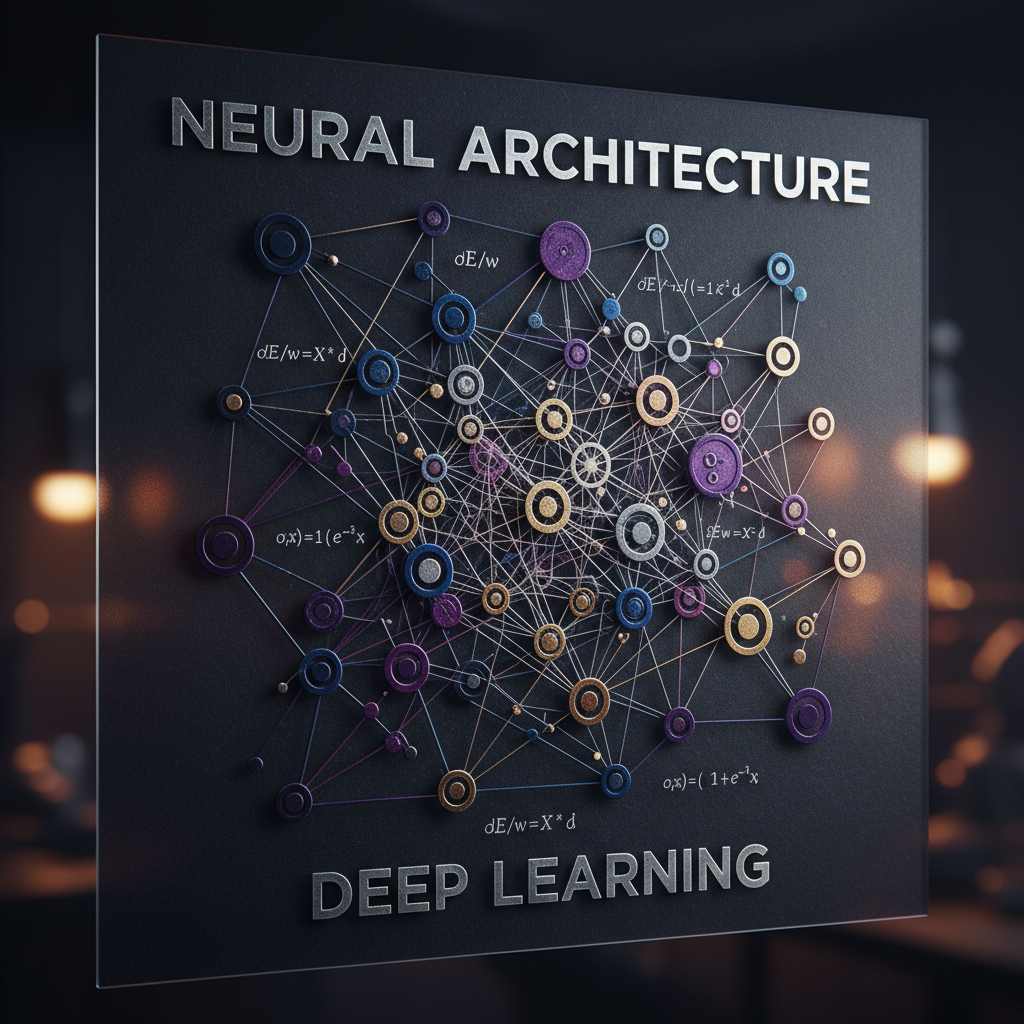
How Do They Work?
Deep neural networks operate through a process called forward propagation, where input data is passed through the network's layers. Each neuron applies a mathematical function to its input, often using activation functions like ReLU or sigmoid to introduce non-linearity.
Once the network processes the input, it generates an output, which is then compared to the desired result. The difference between these two is used to adjust the network's weights through a process known as backpropagation, allowing the model to improve over time.
Training and Optimization
Training a deep neural network involves feeding it large amounts of data, allowing it to learn from examples. This process requires optimization techniques like gradient descent to minimize error and improve accuracy.

Applications of Deep Neural Networks
Deep neural networks have a wide range of applications across various industries. In healthcare, they assist in diagnosing diseases from medical images. In finance, they help detect fraudulent transactions. They also power innovations in autonomous vehicles, natural language processing, and more.
One popular application is image recognition, where networks can identify objects and people in photos with remarkable accuracy. Another area is speech recognition, enabling the development of virtual assistants and more intuitive human-computer interactions.

Challenges and Considerations
Despite their power, deep neural networks come with challenges. They require large datasets and significant computational resources, which can be costly. Additionally, they are often seen as "black boxes," making it difficult to interpret their decision-making processes.
Ethical considerations also play a role, as biased data can lead to biased outcomes. It's crucial to ensure that networks are trained responsibly and monitored for fairness and transparency.
Getting Started
For beginners looking to explore deep neural networks, starting with frameworks like TensorFlow or PyTorch can be beneficial. These tools offer user-friendly interfaces and extensive community support, making it easier to build and train your models.
Online courses and tutorials provide structured learning paths, allowing anyone to dive into this exciting field and start experimenting with their projects.